The Walk-to-the-Train Premium in Long Hill Only Buys Two Direct Trains a Day
September 17, 2026
September 17, 2026
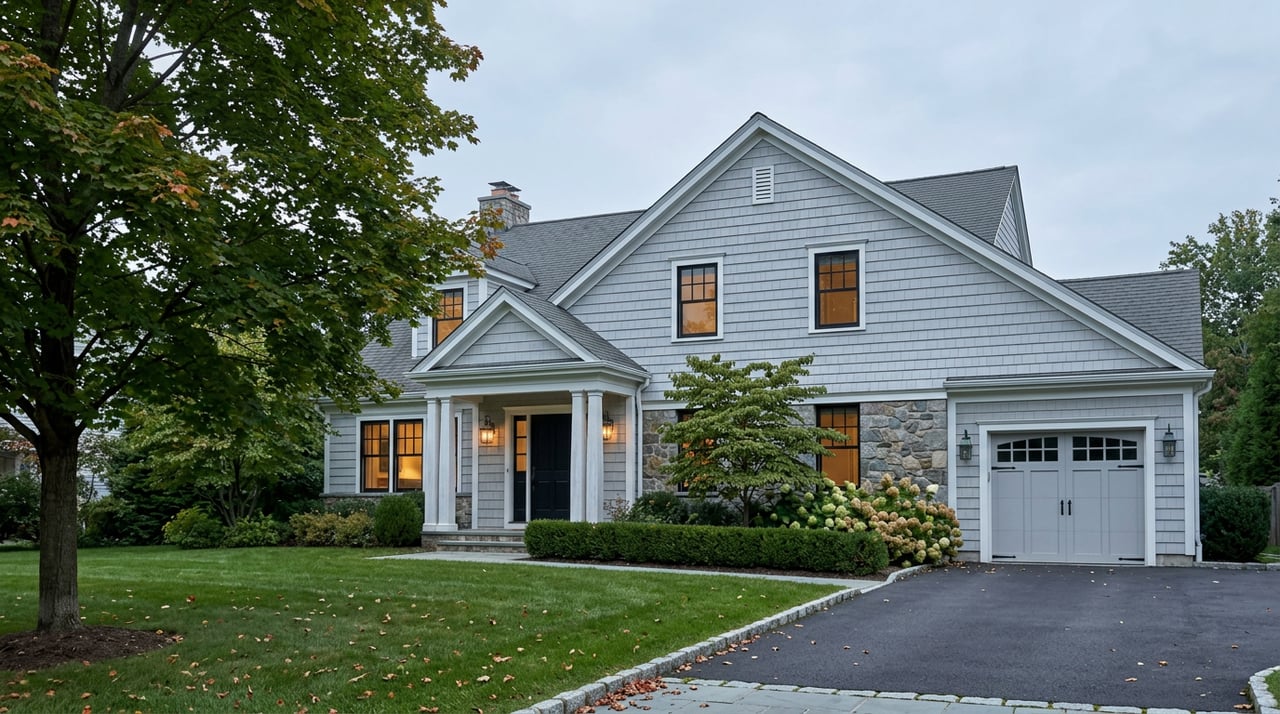
If you have toured a house in Gillette, Stirling, or Millington and heard the phrase "walkable to the train," it is worth asking a follow-up question before that detail moves you toward an offer: which train, and where does it actually go.
Long Hill Township sits on the Gladstone Branch, the western end of NJ Transit's Morris & Essex Lines. All three of its villages have stations on the same branch. But "on the branch" and "one-seat ride to Manhattan" are not the same promise, and the difference shows up the moment you look past the morning rush hour.
The Gladstone Branch runs from Gladstone station east through Peapack, Far Hills, Bernardsville, Basking Ridge, Lyons, Millington, Stirling, and Gillette before merging with the Morristown Line at Summit. East of Summit, trains share track all the way into Hoboken Terminal or, for a small number of runs, New York Penn Station by way of the Kearny Connection.
West of Summit is where the branch becomes its own thing. It is single-tracked for most of its length, with only a few places built to let two trains pass each other: Murray Hill, Stirling, and a siding west of Far Hills. That single-track design is not a footnote. It is the reason the schedule looks the way it does, and the reason disruptions on this branch tend to be longer and more disruptive than on lines with a second track to fall back on.
Here is the number that changes the conversation. Of the roughly 24 inbound and 27 outbound weekday trains on the Gladstone Branch, only two in each direction use the Kearny Connection to reach New York Penn Station without a transfer. The rest terminate at Hoboken, where riders headed to Midtown still need a PATH train or ferry to finish the trip.
Compare that to the Morristown Line, the branch's sister service on the other side of Summit junction. About 45 percent of its weekday trains run as Midtown Direct service straight to Penn Station. On the Gladstone Branch, that share is closer to 8 percent.
That gap matters because it is easy to assume, standing on a platform in Stirling with a house down the block, that you are buying the same commute as a house near the Morristown Line in Chatham or Madison. You are not. You are buying a branch where the one-seat ride to Penn Station exists at two specific departure windows a day, and everything outside those windows means either a Hoboken terminus or a transfer.
On weekends, the Gladstone Branch stops pretending to be a through line altogether. Service runs on an hourly shuttle strictly between Gladstone and Summit. Anyone continuing toward Hoboken or New York transfers across the platform at Summit to a Morristown Line train.
This is not a seasonal quirk or a temporary service cut. A current NJ Transit schedule for a Sunday afternoon in June 2026 shows the pattern in practice: trains departing Gladstone at 4:50 p.m., reaching Millington at 5:14, Stirling at 5:17, Gillette at 5:19, and terminating at Summit by 5:36, where the line ends and a different train takes over for anyone going further east. That is the weekend railroad Long Hill residents actually use, not a historical footnote.
If you are picturing weekend trips into the city with a stroller or a cooler for the beach, budget the transfer into your timeline. It is not a deal breaker. It is a fact worth knowing before closing.
Because most of the branch is single-tracked, any maintenance work tends to shut down a stretch entirely rather than slow it down. NJ Transit's own service advisories for this line show the pattern repeatedly: catenary pole replacement projects that suspended weekend rail service between Gladstone and Summit for an extended stretch, with substitute buses covering the gap, and separate track upgrade work that closed the line between Gladstone and Stirling on specific weekends, requiring riders to board buses at their home station and transfer to a train at Stirling to continue.
Stirling shows up in these advisories more than Gillette or Millington for a structural reason. It is one of only three spots on the whole branch built with a second track, which makes it a natural point for NJ Transit to stage bus-to-rail transfers during construction. That is a small operational fact with a real consequence for daily life if you live near that station during a construction window.
The three villages are often talked about as interchangeable "train towns," but they are not identical. Here is how they differ in what the rail line itself provides.
| Station | Track configuration | Character near the station |
|---|---|---|
| Gillette | Single track | Quieter residential streets, larger lots, closer to Route 78 for a driving alternative |
| Stirling | Double track (passing siding) | Mix of homes and small commercial storefronts, closer to local parks, the branch's main westside transfer point during construction |
| Millington | Single track | Tree-lined streets close to the station, consistently strong buyer interest for walkability |
None of these differences shows up in a median price. All of them show up in your actual weekday and weekend experience once you move in.
If your search has widened beyond Long Hill to towns like Chatham, Madison, or Summit itself, the honest comparison is not home price against home price. It is branch line against main line. Summit sits at the junction where both lines meet, so it gets the benefit of both schedules. Chatham and Madison sit on the Morristown Line side, where nearly half the weekday trains run direct to Penn Station. Long Hill sits on the branch side, where that share drops to roughly one in twelve.
That does not make Long Hill the wrong choice. Its housing stock, its tree cover, and its price point relative to those neighboring towns are real advantages, and plenty of residents structure their work week around the two peak Penn Station trains or simply accept the Hoboken terminus and the PATH transfer as part of the routine. The point is to price the commute honestly rather than assume "walkable to the train" means the same thing in Stirling that it means in Chatham.
Does every Long Hill station offer direct service to New York Penn Station? Only at specific peak hours. Roughly two inbound and two outbound weekday trains use the Kearny Connection to reach Penn Station without a transfer. Most weekday trains terminate at Hoboken instead.
What happens if I need to travel on a weekend? The branch runs as an hourly shuttle between Gladstone and Summit only. Continuing toward Hoboken or New York requires a transfer at Summit to a Morristown Line train, a pattern still in effect as of the current 2026 schedule.
Is one of the three villages more reliable for rail access than the others? Stirling is the only Long Hill station built with a second track, which is why it tends to serve as the transfer point during construction work on the rest of the branch. That is a structural advantage worth asking about if reliability matters more to you than walkability.
Understanding what a "train town" premium actually buys is the kind of detail that separates a comfortable move from a frustrating one. If you are weighing Long Hill against its neighbors, or trying to figure out which of its three villages fits how you actually commute, Karen Gray can walk you through the comparison station by station, house by house. Let's Connect.

Working with Karen means partnering with a trusted advisor who brings market expertise, thoughtful strategy, and a client-first approach to every transaction. Known for her professionalism, attention to detail, and calm guidance, Karen ensures a seamless experience from the first conversation through closing.