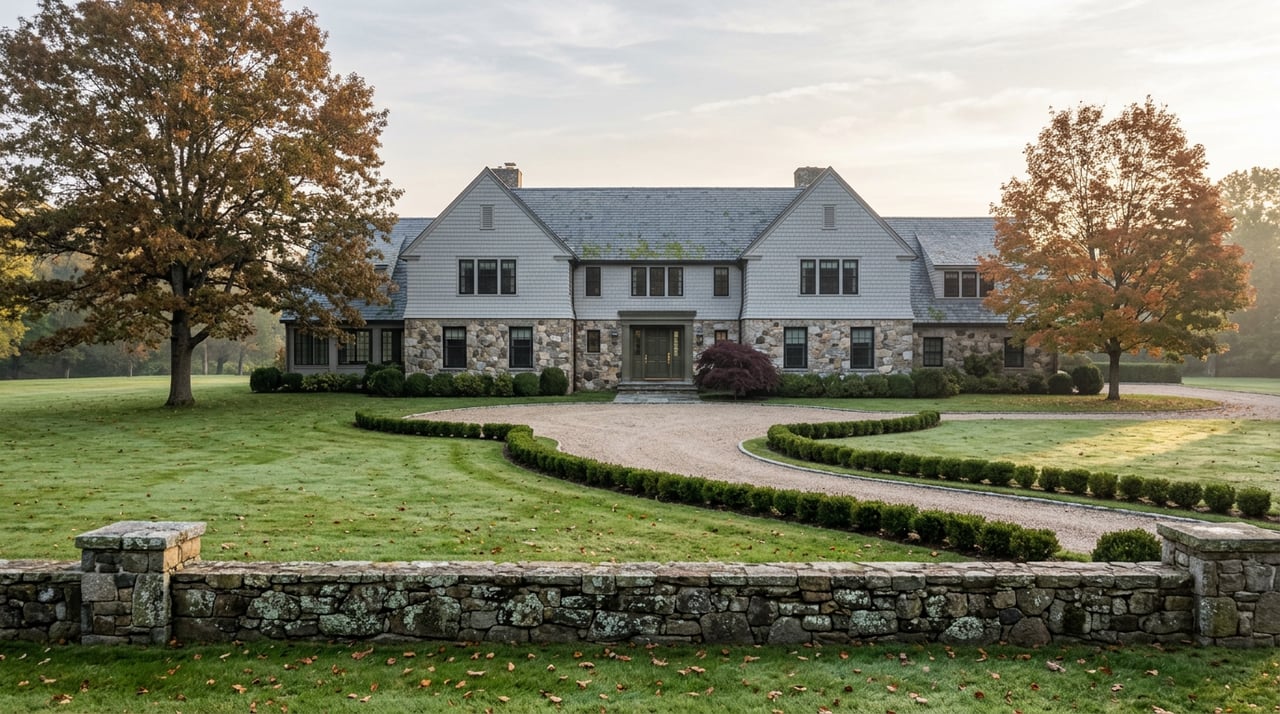
For One October Saturday, Far Hills Isn't the Smallest Town in Somerset County. It's the Biggest.
September 24, 2026
September 24, 2026
Right now, Far Hills is home to 924 people, according to the 2020 Census figure the borough itself keeps on its website. On Saturday, October 17, 2026, the borough will host more than thirty times that many. By Sunday morning, it will go back to being one of the smallest towns in Somerset County, quiet enough that you can hear the trains again.
The occasion is the 105th running of the Far Hills Race Meeting, the steeplechase event everyone in town just calls the Hunt, held every third Saturday in October at Moorland Farm. Visit Somerset County's tourism office puts this year's expected crowd above 30,000. Longtime observers of the event, including the equestrian writer Nancy Jaffer, have described past runnings drawing as many as 40,000 people into a borough that, on an ordinary Tuesday, wouldn't fill a single grade school. If you live here, you already know the day is coming. What's less obvious is what actually happens to the town while it's here, and why the money that pours into Far Hills that day barely touches the businesses that share its zip code.
Here's the detail that makes Far Hills different from almost every other town that hosts a massive one-day event: it's dry. No business inside the borough is licensed to sell alcohol. That's been true for decades, and it hasn't slowed down what is, by most measures, one of the largest tailgate parties in the country.
The explanation is that the Hunt was never built around what the village sells. It was built around what people bring. Jaffer's own account of race day describes caterers staying up all night preparing the spreads that get carried onto the hill at Moorland Farm the next morning, tailgate by tailgate, tent by tent. The Far Hills Race Meeting Association sells private tent packages that run from a few thousand dollars up into the tens of thousands, each one stocked by outside caterers and rental companies, not by anything on Route 202. Reporting from NJBiz on the 104th running priced tailgate and semi-private viewing spaces between $600 and $750, and private tents from $6,000 to $30,000 depending on location, all of it arranged before anyone sets foot in the borough.
So the day's spending is real, but it mostly lands somewhere else. Caterers based outside Far Hills get the calls. Rental companies deliver the tents. The borough itself, dry by law, never gets to ring up the drinks. What Far Hills supplies is the field.
The scale of the crowd has as much to do with the social calendar as the racing card. A former Far Hills official summed it up to von Stade, one of the event's longtime chairmen, in a line that's been repeated in local histories of the event ever since:
"Fifty percent of the people come to see; fifty percent come to be seen."
That split shows up in how the day actually unfolds. Some of the 30,000-plus are there for the Grade 1 American Grand National, the featured race and one of the richest purses on the American steeplechase circuit. Plenty more never make it to the rail. They're in the Vendor Village, or camped at a tailgate spot they've held for years, or wandering a stretch of lawn that, eleven months out of twelve, is just a stretch of lawn.
If you live in the borough, the logistics of race day aren't optional reading. A few specifics worth knowing before the third Saturday in October arrives:
None of this is complicated once you've lived through a Hunt Saturday or two. But if you're newer to the borough, or you're planning a normal Saturday errand run without checking the calendar first, it's the kind of thing that turns a five-minute drive down Route 202 into a genuine test of patience. Jaffer, who has covered the race for years, has written about traffic backing up badly enough that she abandoned her car partway and walked the rest of the way to Moorland Farm on foot.
The restaurants clustered near the Far Hills train station, places like the Butler's Pantry Trackside, Gladstone Tavern, Cafe Azzurro, Ninety Acres, Ladd's Tavern, IL Monello, and Trattoria Mediterranea, sit right in the path of that foot and rail traffic. It's worth knowing they're there if you want a meal out that doesn't require navigating the farm itself.
The steeplechase's economics make more sense once you stop thinking of it as a village festival and start thinking of it as a one-day regional fundraiser that happens to be staged inside a very small town. The Far Hills Race Meeting Association says the event has contributed more than $22 million over its history to regional healthcare and nonprofit organizations, a figure that includes a long-running relationship with Robert Wood Johnson University Hospital Somerset, home to the Steeplechase Cancer Center named for the race itself. Past beneficiary lists have also included Crossroads4Hope, Bonnie Brae, and Community in Crisis, all organizations that serve people across Somerset County, not just Far Hills residents.
That's the actual shape of the day's money. It isn't retail revenue circulating through borough storefronts. It's philanthropic dollars, routed through ticket sales, tent rentals, and sponsorships, headed toward hospitals and nonprofits that serve a much wider footprint than the half-square-mile of village center. The race itself traces back to a 1913 fox-hunting tradition, the Essex Fox Hounds, and a thank-you gathering for local farmers called the Farmers' Day Race Meeting. The name Hunt stuck even though, as local historians point out, there hasn't been an actual hunt associated with the event in decades. What's left is the fundraising, the tailgates, and the crowd.
By Sunday, the tents come down, the shuttle buses are gone, and Route 202 clears out. The Gladstone Line trains run their normal schedule again. Far Hills goes back to being a town where 924 people can walk to the platform without competing with anyone for a parking spot. For one Saturday a year, it becomes something else entirely, and the fact that the money moving through it barely touches its own Main Street is as much a part of the tradition as the race itself.
If you're new to Far Hills, or thinking about what makes a town like this tick beyond the calendar, Karen Gray has spent years getting to know its rhythms, race weekends included. Let's Connect if you'd like to talk about what makes this corner of Somerset County home.

Working with Karen means partnering with a trusted advisor who brings market expertise, thoughtful strategy, and a client-first approach to every transaction. Known for her professionalism, attention to detail, and calm guidance, Karen ensures a seamless experience from the first conversation through closing.