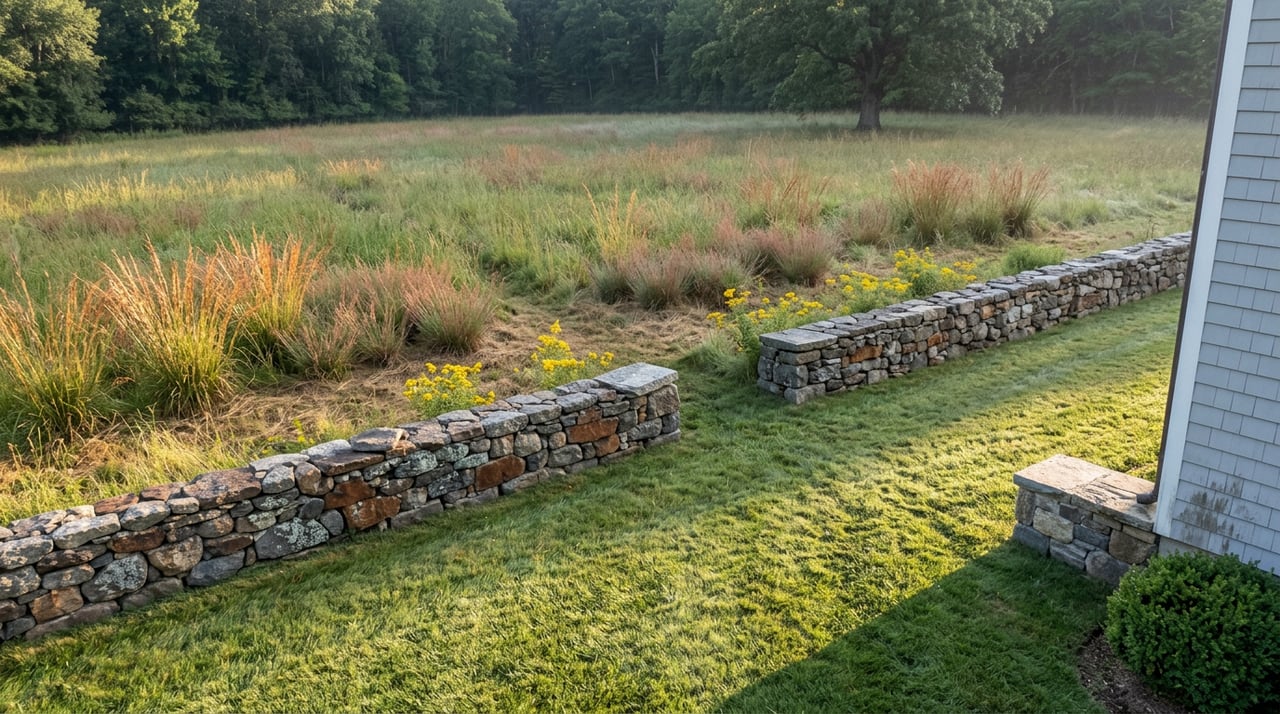
The Tax Bill on That Far Hills Estate Might Be a Loan, Not a Discount
August 27, 2026
August 27, 2026
A buyer touring a 12-acre property outside the village center pulls up the tax record and sees a number that looks almost like a typo. A house with a pool, a barn, and a long gravel drive, carrying an annual tax bill closer to what a townhouse pays two towns over. The listing agent mentions, almost in passing, that the property is "farm assessed." The buyer nods, files it away as a nice perk, and moves on to inspecting the roof.
That number is not a permanent feature of the land. It is a status the current owner earned by keeping the property in qualifying agricultural or horticultural use, and it can unwind the moment that use stops, whether the new owner meant to change anything or not.
New Jersey's Farmland Assessment Act lets landowners with at least five contiguous acres, not counting the house lot itself, have that acreage valued for tax purposes on what it produces as farmland rather than what it would sell for as residential real estate. In practice this is why so many large lots in Far Hills carry tax bills that seem disconnected from their size. The land underneath the pasture or the hay field is taxed like pasture and hay, not like an estate lot with mountain views.
Qualifying isn't automatic and it isn't free of paperwork. The law requires the acreage to have been actively devoted to agricultural or horticultural use for two full years before the assessment year, and it sets a minimum income test: gross sales, fees, or payments of at least $1,000 a year on the first five acres, plus $5 for every acre beyond that, or a lighter $500-plus-$0.50-per-acre standard if the qualifying acreage is managed woodland. For horse properties specifically, income from boarding, training, or rehabilitating horses can count toward that threshold, which is a large part of why equestrian estates in this corner of Somerset County so often carry the designation.
| Land type | Minimum acreage | Annual income threshold |
|---|---|---|
| General agricultural/horticultural | 5 acres (exclusive of house lot) | $1,000 for first 5 acres, plus $5/acre beyond |
| Managed woodland/wetland | 5 acres (exclusive of house lot) | $500 for first 5 acres, plus $0.50/acre beyond |
None of this is a one-time application. Owners file Form FA-1 and, where woodland is involved, a Woodland Data Form, with the municipal tax assessor every single year by August 1 for the following tax year. Far Hills handles this through its own tax assessor's office, and the borough makes both the property search request and the farmland assessment application available directly through that office. Miss the filing window or let the qualifying activity lapse, and the assessment doesn't quietly continue. It has to be re-earned.
Here is the mechanism that matters most at the closing table, and it is the reason this deserves more attention than a line item in a title search. Rollback tax liability attaches to a change in the use of the land, not to a change in who owns it. If a new owner keeps the same hay lease running or continues to board horses at qualifying income levels, the assessment carries forward without triggering anything. The problem is that a lot of Far Hills buyers aren't purchasing these estates to keep running them as working hay ground. They're buying land for personal riding, for privacy, for the view. And that shift, even when it feels cosmetic to the new owner, is exactly the kind of change in use the law is built to catch.
Common moves that can break qualification on a property that was farm assessed under the previous owner:
When the use changes, the municipality doesn't just reset the assessment going forward. It calculates rollback taxes: the difference between what was paid under farmland assessment and what would have been paid at full market value, applied to the year the change happens and the two tax years immediately before it. A property that has carried a farm assessment for years can generate a retroactive three-year bill the moment its new owner decides the back forty would look nicer as a lawn.
There's a legal nuance worth knowing here too. New Jersey Tax Court has held that assessors need clear evidence of an actual change in use before rollback taxes can be imposed, not just a suspicion that the qualifying activity has slipped. That case, involving a Raritan Township property, is a reminder that this isn't a purely mechanical trigger, but it also means the rules get applied unevenly depending on how carefully a given municipality monitors its farm-assessed parcels.
New Jersey signed the Woodland Tax Assessment Integrity and Investment Act into law in 2026, increasing penalties for fraudulent farmland assessment claims and expanding oversight of how municipalities verify qualifying activity. For a buyer evaluating a Far Hills estate right now, that matters in a practical way. Assessors statewide are operating under closer scrutiny of borderline cases, which means the days of a farm assessment quietly continuing on autopilot, regardless of what's actually happening on the land, are less likely to hold.
For buyers, the practical move is to ask two questions before falling in love with a low tax number: what specific activity is generating the qualifying income right now, and is that something you actually intend to continue. If the answer is no, that low tax bill needs to be treated as a temporary condition in your carrying-cost math, not a permanent one. Your attorney can request the seller's most recent FA-1 filing and gross sales documentation during due diligence, which tells you exactly how the qualification is currently being met and how fragile or durable that arrangement is.
For sellers, accurate disclosure of farmland-assessed status protects you as much as it protects the buyer. A buyer who later gets hit with rollback taxes because they didn't understand what they were inheriting is a buyer who remembers exactly whose listing they bought it from.
If I buy a farm-assessed property and do nothing differently, will I owe rollback taxes? Not automatically. Liability attaches to a change in use, so a buyer who continues the same qualifying agricultural or horticultural activity the previous owner maintained generally does not trigger rollback taxes at the time of sale.
How far back can rollback taxes reach? Up to three tax years: the year the use changes, plus the two years immediately before it, calculated as the difference between what was paid under farmland assessment and what would have been owed at standard valuation.
Does keeping a few horses automatically qualify a property? Not by itself. The acreage used for boarding, training, or rehabilitating horses has to be contiguous to otherwise qualifying farmland, and the income generated has to meet the same gross sales thresholds that apply to any other agricultural use.
Who do I talk to about a specific Far Hills property's farmland assessment status? The borough's tax assessor's office handles both farmland assessment applications and property record requests directly, and that office is the right first call for confirming a parcel's current status before you write an offer.
Understanding what's actually underneath a tax bill is part of understanding what you're buying, especially on the larger lots that make this stretch of Somerset County what it is. If you're evaluating a farm-assessed estate in Far Hills, or thinking about what your own property's assessment status means for a future sale, Karen Gray can walk through the specifics with you. Let's Connect.

Working with Karen means partnering with a trusted advisor who brings market expertise, thoughtful strategy, and a client-first approach to every transaction. Known for her professionalism, attention to detail, and calm guidance, Karen ensures a seamless experience from the first conversation through closing.